
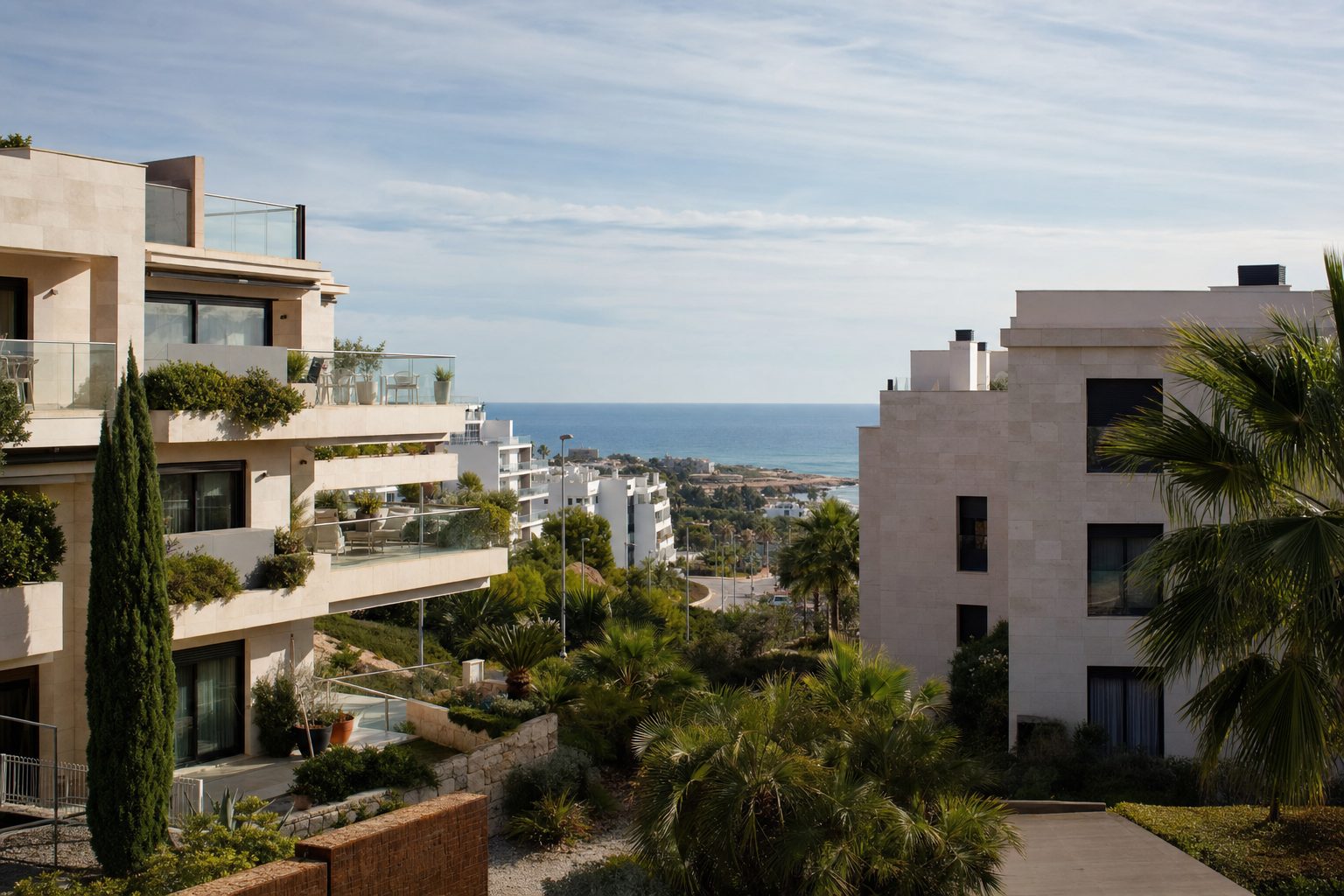
In January, the southern Costa Blanca is mild, bright and mostly dry. Official figures for Alicante from AEMET, Spain's state meteorological agency (1981–2010 averages) show daytime highs of about 17°C and night-time lows of about 6°C. There are around 23 mm of rain spread over 3–4 rainy days, and roughly 181 hours of sunshine, or about six hours a day. January is the coolest month of the year, but frost is rare: AEMET records fewer than one frosty day in a typical January.
The Mediterranean climate is one of the biggest draws to this coast, but "sunny" doesn't tell you much on its own. Below is what the official data shows for every month in Alicante, which sits at the heart of the southern Costa Blanca, and what it means if you're visiting or planning a move.
Costa Blanca weather in January: what it feels like
- Days: often pleasant enough for a walk on the beach or lunch outside in the sun, especially out of the wind. At about 17°C, a January afternoon here is usually warmer than a typical late-spring day in the UK or Belgium.
- Evenings and nights: with lows around 6°C, it cools down quickly after sunset. Bring a warm jacket and layers.
- Indoors: this is the part that surprises people. Many local homes are built to stay cool in summer, not warm in winter, so an unheated or poorly insulated property can feel cold. If you're viewing or renting in January, ask how the property is heated.
- The sea: the air may feel mild, but most people find the sea too cold for a comfortable swim at this time of year.
Month by month: the official figures
These are AEMET's standard climate values for the Alicante/Alacant station (averages for 1981–2010). "Rainy days" counts days with at least 1 mm of rain. Towns along the coast, such as Orihuela Costa, will vary a little, but the pattern is the same.
| Month | Avg high | Avg low | Rain | Rainy days | Sunshine |
|---|---|---|---|---|---|
| January | 17.0°C | 6.3°C | 23 mm | 3.6 | 181 h |
| February | 17.6°C | 7.1°C | 22 mm | 3.0 | 180 h |
| March | 19.6°C | 8.9°C | 23 mm | 3.4 | 227 h |
| April | 21.3°C | 10.9°C | 29 mm | 4.1 | 247 h |
| May | 24.1°C | 14.1°C | 28 mm | 4.0 | 277 h |
| June | 27.8°C | 18.1°C | 12 mm | 1.8 | 302 h |
| July | 30.3°C | 20.7°C | 4 mm | 0.6 | 330 h |
| August | 30.8°C | 21.2°C | 7 mm | 1.1 | 304 h |
| September | 28.5°C | 18.5°C | 56 mm | 3.3 | 250 h |
| October | 24.9°C | 14.5°C | 47 mm | 4.5 | 217 h |
| November | 20.5°C | 10.3°C | 36 mm | 4.2 | 173 h |
| December | 17.7°C | 7.4°C | 25 mm | 3.8 | 164 h |
| Year | 23.3°C | 13.2°C | 311 mm | 37.5 | 2,851 h |
Average temperatures through the year
In AEMET's figures, mean monthly temperatures in Alicante run from 11.7°C in January to about 26°C in July and August, with daytime highs regularly in the low 30s°C at the height of summer and rarely dropping below the mid-teens even in the coolest winter months. Rainfall is concentrated in short, sometimes intense spells rather than spread evenly across the year — autumn in particular can bring heavier downpours than people expect from a "dry" climate.
What this means season by season
- Winter (Dec-Feb): Mild by UK and Belgian standards — average daytime highs of about 17–18°C in AEMET's figures — but evenings can feel properly cold indoors if a property isn't well insulated or heated, since many local homes are built with summer heat in mind rather than winter cold.
- Spring (Mar-May): Generally considered the most comfortable stretch — warming steadily, long daylight hours, before the peak summer heat arrives.
- Summer (Jun-Aug): Consistently hot, often 30°C+ in the day through July and August. This is when good air conditioning and shade genuinely matter, particularly for anyone not used to sustained heat.
- Autumn (Sep-Nov): Still warm into September and October, but this is also when the region's occasional heavy rain events are most likely — worth knowing if you're planning outdoor moving-in logistics for this period.
What this means if you're planning a viewing trip or a move
Many people visit in the shoulder seasons (spring or early autumn) specifically to see the area outside of peak summer heat and peak tourist season, which also tends to mean better availability for property viewings and removals bookings. If you're moving with school-age children, see our schools and family life guide for how term timing interacts with the move itself.