
The most useful advice about moving here usually comes from people who have actually done it. So this week we sat down with an English tennis and padel coach who has lived on the southern Costa Blanca for more than two decades. He'd rather keep his name out of it, so we haven't used it, but he was happy to be completely candid about everything else.
What follows is his experience and his opinions, in his own words where possible. It's one person's view, not a rulebook, but it's a very grounded one.
Why the Costa Blanca?
He moved out from London in 2003. The choice was partly made for him: his wife's family had bought a villa in Villamartín early on, when the development was first being built, so there was already a family connection to the area. Beyond that, he says, it was simply "a very well priced area of Spain, and it was nice." Those two reasons still come up a lot when we talk to people considering a move today.
The hardest part: finding a good lawyer
Asked what caught him out most when he first arrived, whether paperwork, healthcare or language, his answer was immediate: "Lawyers weren't great. You need to get a good lawyer."
It's a point we hear often. For anything involving buying property, residency or contracts, it's worth taking the time to find an independent, properly qualified lawyer who works for you, rather than simply using whoever is suggested by the other side of a transaction. Over the years he has found a lawyer he rates for residency and an accountant he trusts, which tells you something too: the good ones exist, but you often find them through word of mouth. (We're not lawyers ourselves, and nothing here is legal advice, but we can help point you towards professionals recommended by people who've used them.)
What he'd tell a friend from home
If a friend back in England told him they were moving out, this is what he'd say:
- Expect a slower pace of life. "Things take a long time to get done here. You just have to be patient."
- Join in. "You've got to join clubs, play tennis, play padel. If you don't play sport, do something. Find a social group." Building a life outside the house, he says, is what makes the difference between settling in and drifting.
- Watch the drinking. Long, cheap lunches and cheap wine are one of the pleasures of living here, but he's seen it become a habit for a lot of people. "You can't just sit in bars drinking. Be careful of that, because that happens to a lot of people."
- Budget from day one. "People come out and they think they're on holiday. They spend too much money, and they have to go back home again." His point: "You're living here, it's your home. It's not just a holiday."
That last one echoes what we covered in our post on the common mistakes UK and Belgian movers make. Treating the first few months as an extended holiday is one of the quickest ways to burn through savings.
Working for yourself in Spain
The one thing he wishes he'd known before going self-employed was how the monthly social security payment works. As an autónomo (self-employed worker), you pay a monthly contribution to Spanish social security, and in his case it comes to roughly €350 a month, whether it's been a busy month or not.
It's worth knowing that the system has changed since he started. Contributions are now linked to your expected net earnings, across a series of income bands. According to Holded's 2026 guide to the autónomo quota, monthly payments for 2026 range from about €200 to €590 depending on the band you fall into. The exact figure and any new-starter reductions depend on your circumstances, so talk to a gestor or a qualified accountant before registering.
His view on what you get back is positive: "The health service is really very good."
A frank note on hospital stays
He was full of praise for the doctors. His experience of hospital nursing, though, was less positive, and he's spent time in hospital on his own. The underlying issue is a cultural one that often surprises British patients: in Spanish hospitals, relatives are generally expected to help with day-to-day personal support. Guides for British families, such as Skycare's comparison of Spanish hospital care and the NHS, describe how staff handle clinical care while family members usually help with eating, hygiene, companionship and supervision.
For anyone moving out alone, or as a couple without family nearby, it's worth thinking early about who you'd call on if you needed a hospital stay. That might be friends, neighbours, or your social network from the clubs and groups he recommends joining. It's another good reason to build those connections early.
Coaching as a foreigner: the local reality
He is a self-employed tennis and padel coach who works with all ages. Finding somewhere to coach isn't straightforward, he says. Spanish clubs already have their own Spanish coaches, and the municipal sports centres in the towns near him run group lessons for local schoolchildren with their own staff. In practice, that means he coaches at private facilities such as golf resorts with tennis and padel courts.
If you're planning to bring a trade or a skill with you, it's a useful lesson. Research where your customers will actually come from, and whether the local market is open to newcomers, before you rely on it for income.
Life inland in the Vega Baja
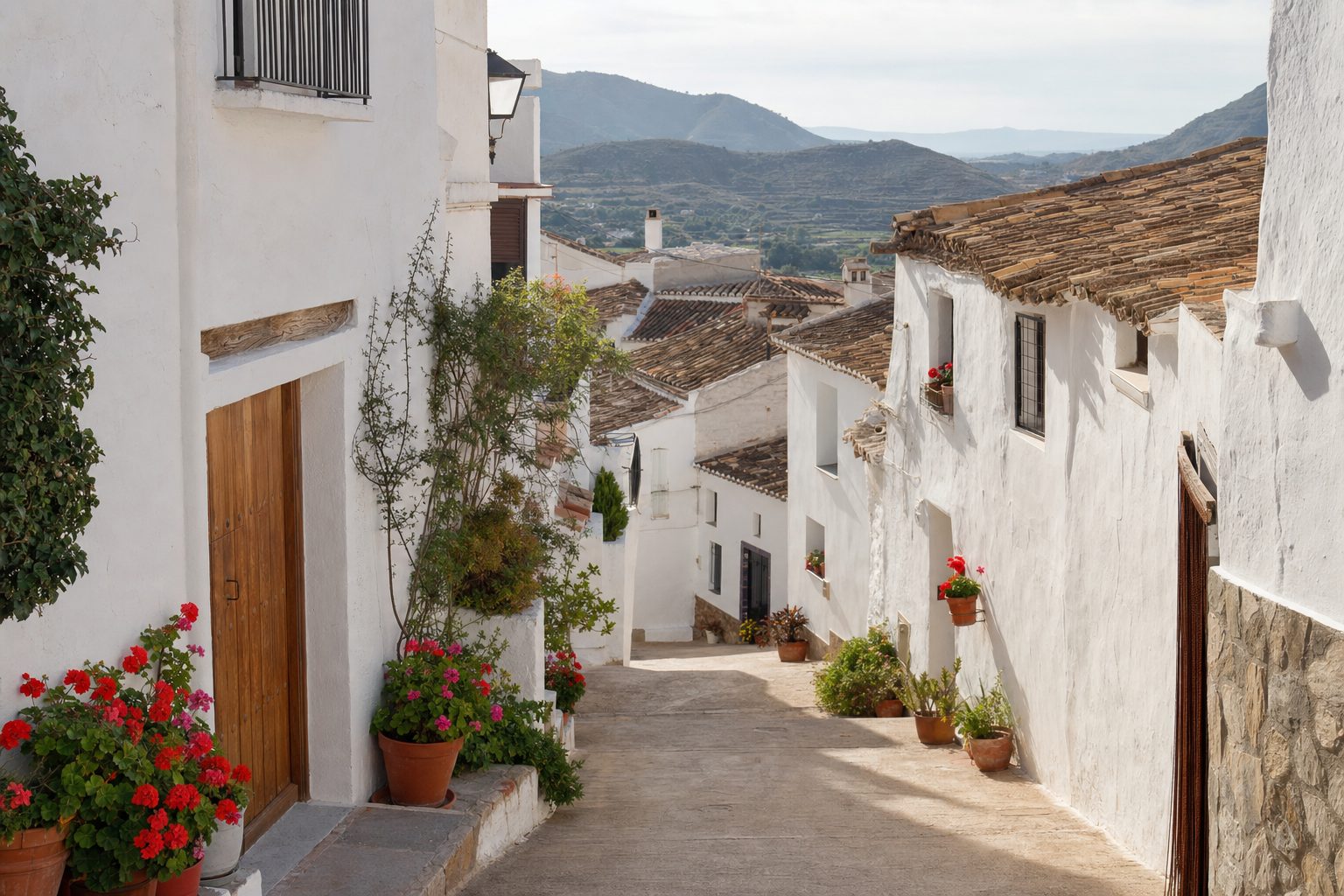
He lives about half an hour inland from the coast, in a small village in the Vega Baja, the farming plain of the Segura river in the south of Alicante province. "I love it because it's very rural. I've got a beautiful view of the mountains and it's quiet." Having left London because he doesn't like cities, he finds the pace and the people suit him: "There's not too many of them, and they're nice people."
The inland villages have a very different feel from the coastal urbanisations: more Spanish, more agricultural, and quieter. If that appeals, it's worth including a couple on any viewing trip alongside the coast. Our area guides are a good starting point for comparing the two.
What everyday life costs him
These are one household's figures and experiences, not averages. They'll depend a lot on your property, your habits and when you're reading this. For a broader, sourced comparison, see our cost-of-living post.
- Lunch: The menú del día is still one of the best-value things about Spain. In his experience you can often get a three-course menu for around €10 at local Spanish restaurants, sometimes with wine included. It has an interesting history. As 20minutos explains, it started in 1965 as a fixed-price "menú turístico" that restaurants were required to offer. It was introduced by the Franco-era tourism minister Manuel Fraga to attract foreign visitors, and was renamed "menú del día" in 1970.
- TV: There's no TV licence to pay. Angloinfo confirms that Spain has no licence fee and that channels are funded by advertising.
- Internet: Even in the countryside, he now has a fast cabled connection. He says TV and communications "are not a problem" any more.
- Mobile: His Spanish phone contract costs about €13 a month and works when he's back in England. Roaming terms vary between providers and tariffs, so check yours if you travel back often.
- Cars: Cars are one of the things that cost more than people expect, especially second-hand ones. Without salt on the roads, older cars don't rust and keep their value. His own 17-year-old car, bought new, would still be worth a surprising amount. His advice is that buying new can work out better value. We'd suggest comparing prices yourself before you ship or sell your current car.
- Fuel: Prices go up and down, but in his experience fuel is cheaper than in the UK and France. He remembers it being noticeably more expensive when he drove to France one summer. Diesel has often been cheaper than petrol here.
- Bills: His electricity is around €100 a month. His water bill, for a house with a large garden and a private pool, is normally around €100 a quarter, and he'd expect a typical home without a big garden to pay less.
Two restaurants he'd send you to
We asked for his two favourite places to eat locally. We haven't been paid to mention either, and they're simply his recommendations:
- Finca Rebate, a restaurant in the countryside near San Miguel de Salinas. It's set in a carefully restored 18th-century country village, complete with its own chapel. To get there, you take the back road from Campoamor towards San Miguel de Salinas and follow the signs. It's a lovely country drive. "If you go early enough to get the sunset, it's just beautiful, and the food is delicious." It's where he goes for his birthday, and he thinks it's good value for the quality and the setting.
- Gong in Playa Flamenca, in the Flamenca Beach commercial centre. "It's the best Asian food you can get," he says, and it's not too expensive either.
Opening days and menus change, so check before you go.
His advice in short
- Get a good, independent lawyer.
- Budget from the start, because it's your home, not a holiday.
- Be patient, as things take longer here.
- Join clubs, play sport and find your people.
- Enjoy the cheap lunches, but keep an eye on the wine.
Many thanks to him for giving up his time and being so open. If you're weighing up a move and want to talk through your own situation, from which areas to look at to finding trusted local professionals, we're happy to help.